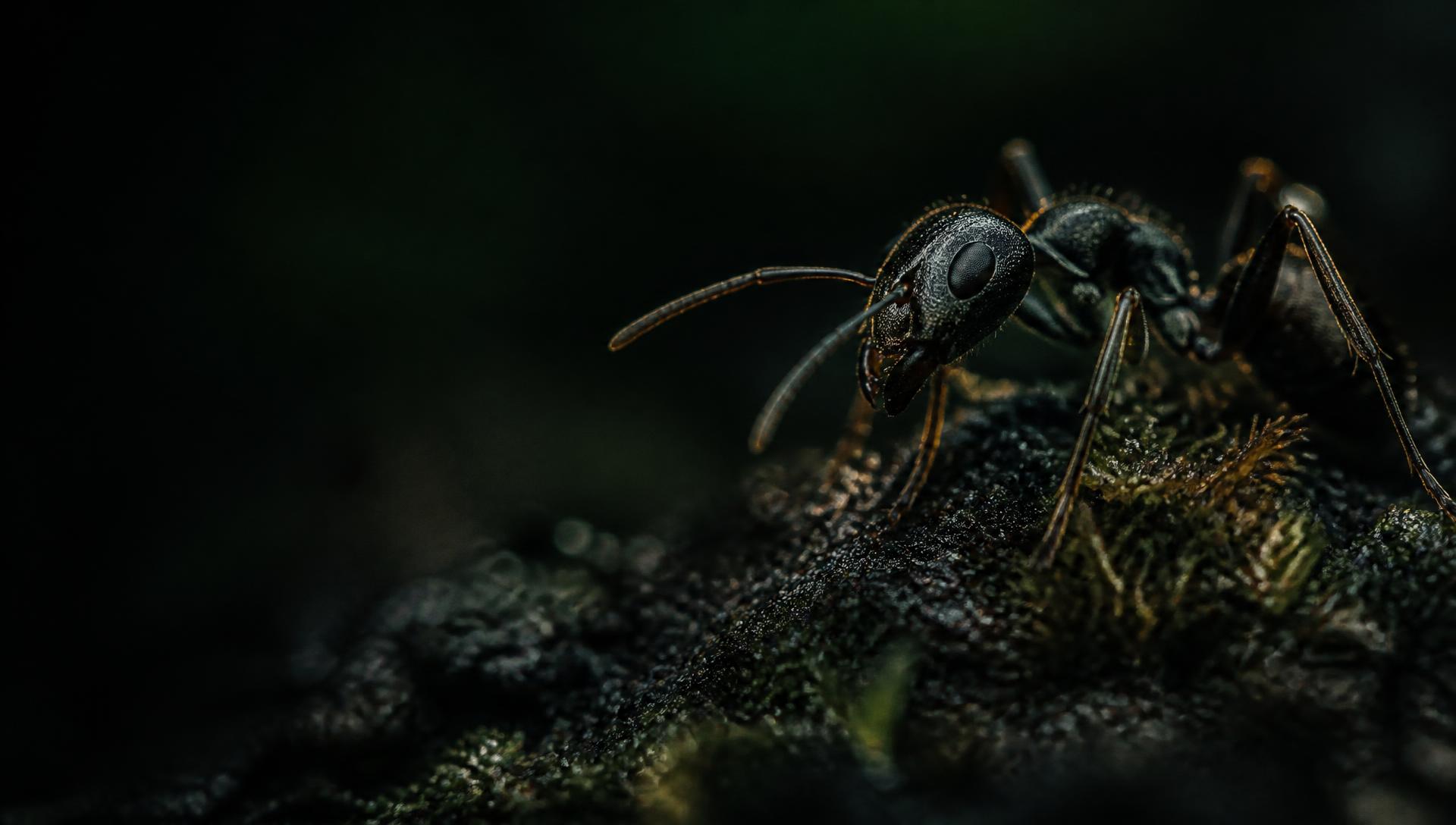
ANTS
OF THE
STRUCTURE,
turf & SOIL.
Twenty-one species dissected for the people who actually have to deal with them, pest-management pros, extension agents, facility managers, and obsessive naturalists. Identification keyed to what you'll see on a flashlight beam at 11pm, not a museum drawer.
Featured
specimens.

Red Imported Fire Ant
The most economically significant invasive ant in the United States: a stinging, mound-building South American species under federal quarantine, requiring a two-step bait-and-treat program.
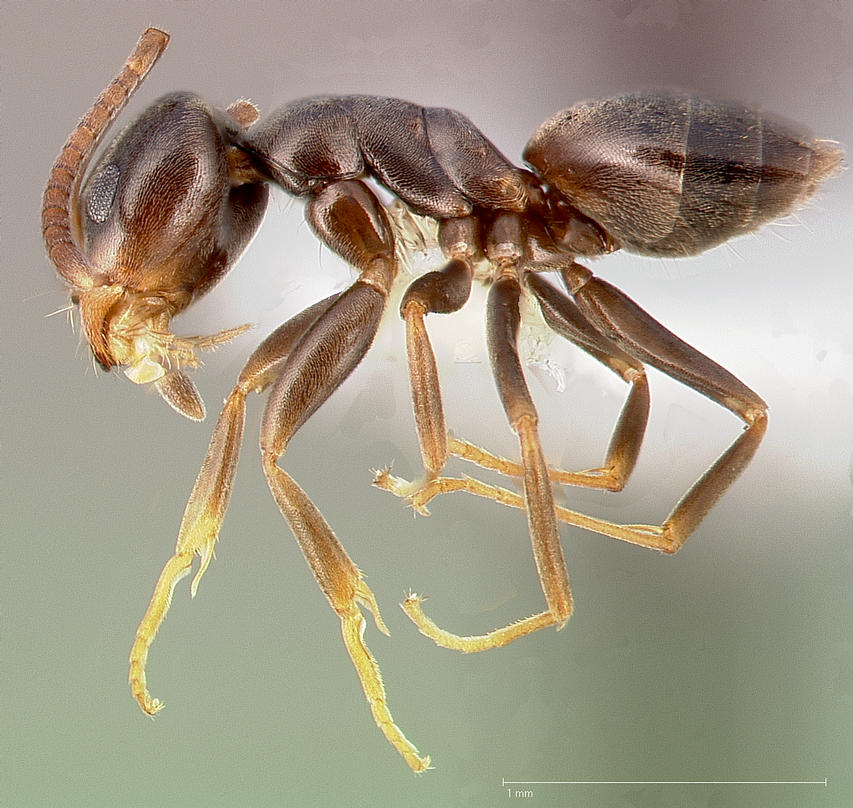
Odorous House Ant
The single most common household ant complaint in much of the U.S.; recognized by the rotten-coconut odor when crushed and by colonies that rapidly bud under pressure.

Carpenter Ant
Large wood-excavating ants and the second most economically damaging structural ant in the U.S. after termites; presence indicates a chronic moisture problem in the structure.

Tawny Crazy Ant
An invasive supercolony ant that reaches densities so extreme it smothers electrical equipment, displaces fire ants and native wildlife, and resists standard bait programs; fipronil perimeter applications are the current operational standard.
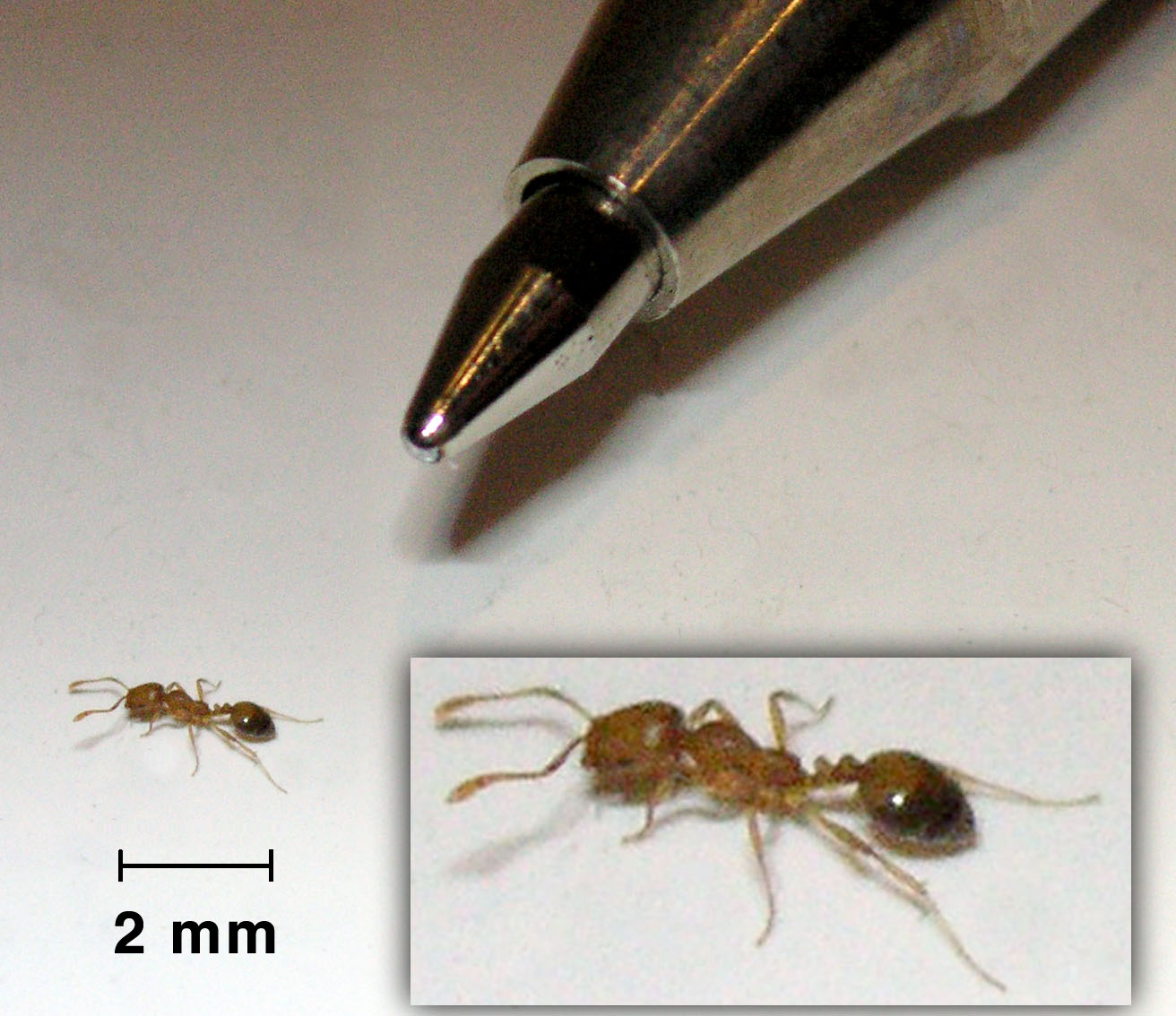
Pharaoh Ant
The classic indoor budding ant of hospitals, apartments, and commercial kitchens; the single most important rule is 'do not spray', repellent insecticides shatter the colony and turn one infestation into twenty.
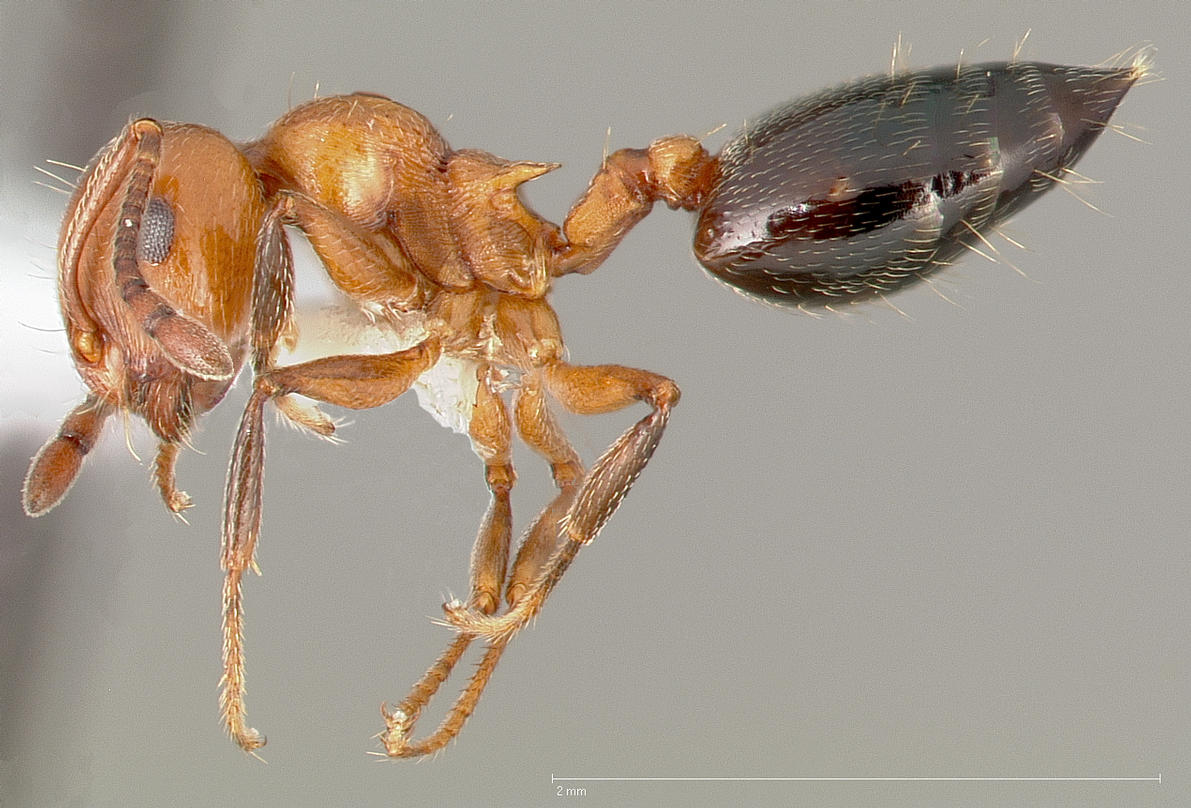
Acrobat Ant
A medium-small ant recognized by raising its heart-shaped gaster overhead when alarmed; commonly occupies abandoned carpenter ant or termite galleries and is therefore a useful indicator of pre-existing wood damage.
Ants are not a single problem. A pharaoh colony budding under a hospital radiator and a fire-ant supercolony erupting through a pasture are different jobs, with different baits, different timing, and different ways to fail. This manual treats each species like a case file, not a cookie-cutter spray-and-pray.