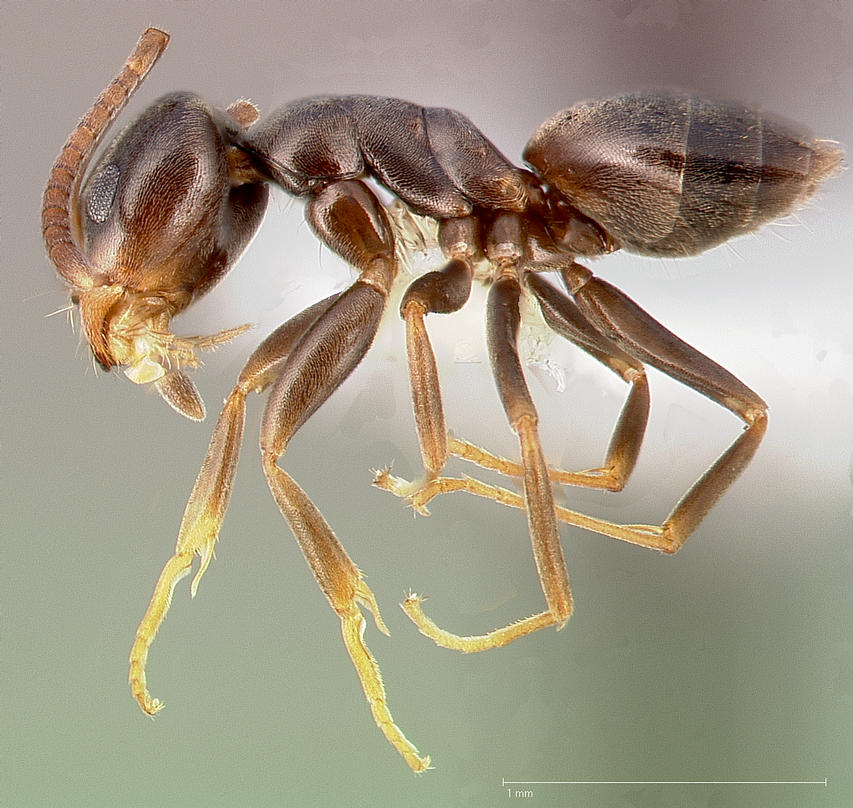
Identification
A small, evenly dark brown ant 2.4–3.3 mm with one node hidden under the gaster (the gaster overhangs and conceals it in profile, a key separator from Argentine ants, which have a clearly visible node). Twelve-segmented antennae with no club. When crushed, workers release a distinctive rotten-coconut or blue-cheese odor; this is the fastest field confirmation.
Biology & Colony Structure
Colonies are polygyne and polydomous, many queens distributed across many connected nests. A mature colony can hold 10,000+ workers and dozens of queens, and stress (sprays, weather, disturbance) triggers budding: queens and workers split off to establish new satellite nests, often making infestations worse after a careless contact-spray treatment. Nests are highly mobile and often relocate after rain or temperature swings.
Pest Status & Significance
Primary nuisance pest in kitchens, bathrooms, and pantries; not a stinger and not a structural destroyer, but trail densities can be extraordinary and recurrent. Often tracked indoors after heavy rain saturates outdoor nests. Frequently mis-treated as 'just sugar ants' with repellent over-the-counter sprays, which causes budding and a worse problem the following week.
Odorous House Ant Control Strategy
Non-repellent perimeter spray plus sweet liquid baits is the operational standard. Inspect outdoors first, colonies almost always nest within 10–20 ft of the structure under mulch, landscape timbers, or in wall voids near plumbing. Apply sweet liquid bait at every active trail and refresh until trails disappear, then treat the structural perimeter with a non-repellent for residual control. Eliminate honeydew-producing aphids and scale on landscape plants near the foundation; this single step often collapses an infestation that resists indoor treatment.
Recommended Baits & Active Ingredients
Product names are representative of the active-ingredient class and intended for licensed PMPs. Always read and follow the label; rates, sites, and restrictions vary by formulation and state registration.
| Product | Active | Form | Use |
|---|---|---|---|
| Terro PCO Liquid Ant Bait | Borax 5.4% | Liquid | Sweet sucrose bait, preferred first-line for ODH; place at every trail and refill until inactive. |
| Advance 375A Select | Abamectin B1 0.011% | Granular | Granular bait around the structural perimeter and in turf beds. |
| Maxforce Quantum | Imidacloprid 0.03% | Liquid | Concentrated sucrose bait diluted into bait stations; very long shelf life in stations. |
| Termidor SC | Fipronil 9.1% | Spray | Non-repellent 1–3 ft up / 1–3 ft out perimeter band; transfer effect kills the queen via grooming. |
| Optigard Ant Gel | Thiamethoxam 0.010% | Gel | Indoor crack-and-crevice gel; sweet matrix preferred over protein for this species. |