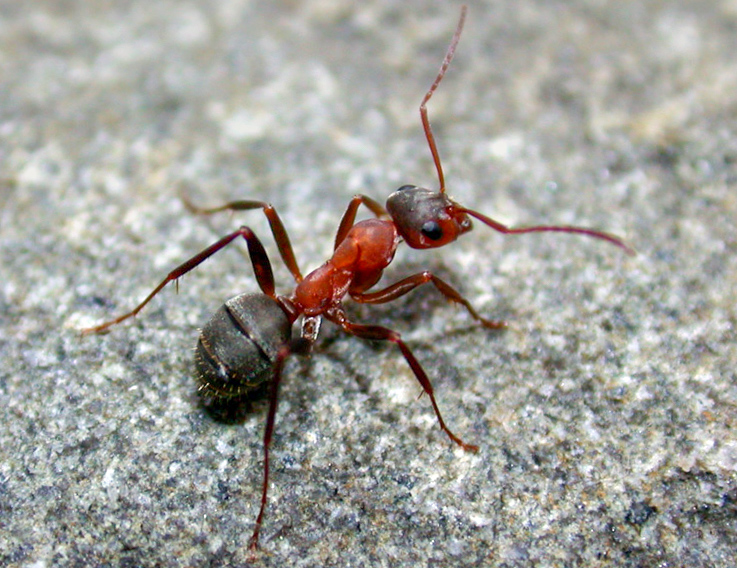
Identification
Large (4–8 mm), single petiole node, evenly rounded thorax (no spines), and a circle of hairs at the gaster tip, superficially similar to carpenter ants. Separate from Camponotus by smaller size, dorsal notch on the thorax (Formica has a notch; Camponotus has a smooth arch), and by soil-nesting rather than wood-nesting habit.
Biology & Colony Structure
Mostly single-queen colonies of several thousand to tens of thousands of workers; some species (F. exsectoides, F. obscuripes) build very large 'thatch' mounds of soil and plant debris. Strongly territorial outdoor foragers. Many species 'enslave' other Formica species, interesting biology, no pest relevance.
Pest Status & Significance
Mainly beneficial as insect predators. Pest concerns: cosmetic mounds in turf; tending of aphids on ornamentals; occasional indoor invasion looking for sweets in homes built right against woodland edge.
Field Ant Control Strategy
Tolerate where ecologically reasonable. For nuisance turf mounds, treat individual mounds with a granular bait or contact drench. Indoor invaders respond to standard sweet liquid bait and perimeter program.
Recommended Baits & Active Ingredients
Product names are representative of the active-ingredient class and intended for licensed PMPs. Always read and follow the label; rates, sites, and restrictions vary by formulation and state registration.
| Product | Active | Form | Use |
|---|---|---|---|
| Maxforce Complete Granular | Hydramethylnon 1.0% | Granular | Broadcast over individual mounds and trail areas. |
| Sevin SL | Carbaryl 43% | Drench | Direct mound drench for large nuisance mounds in turf. |
| Termidor SC | Fipronil 9.1% | Spray | Non-repellent perimeter band where indoor invasion is the complaint. |