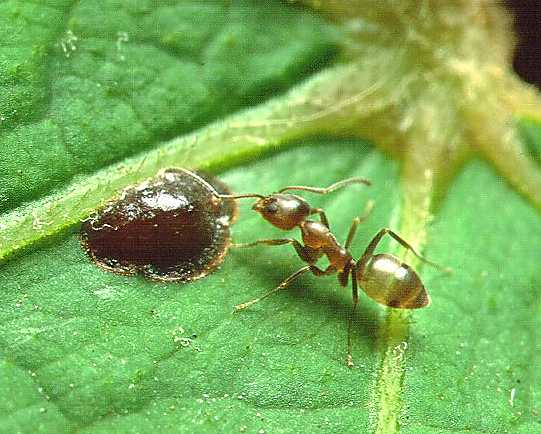
Identification
Uniform dull medium brown, 2.2–2.8 mm, monomorphic. Single petiole node clearly visible in profile (separates from odorous house ant, where the node is hidden under the gaster). Twelve-segmented antenna, no club. No odor when crushed (separates from ODH). Trails are heavily marked, persistent, and follow physical edges, sidewalk cracks, irrigation lines, baseboards.
Biology & Colony Structure
Unicolonial, workers from genetically distinct nests do not fight, so populations function as one continuous supercolony. The 'California Large Colony' is estimated to span ~560 miles of coastline. Polygyne with many queens per nest; reproduces overwhelmingly by budding. Massive seasonal indoor invasions during summer drought and winter rains when outdoor conditions become unsuitable.
Pest Status & Significance
Single most common structural ant in coastal California and a major pest across the Gulf. Heavy trailing in kitchens, bathrooms, garages, and around pet food. Displaces native ants and disrupts pollination networks. Damages drip irrigation by farming root aphids.
Argentine Ant Control Strategy
Sweet liquid bait at high volume around the perimeter and at every active trail, plus a non-repellent fipronil or thiamethoxam perimeter band. Liquid sucrose bait is the gold standard because of the species' dominant carbohydrate appetite. Successful programs maintain bait stations year-round.
Recommended Baits & Active Ingredients
Product names are representative of the active-ingredient class and intended for licensed PMPs. Always read and follow the label; rates, sites, and restrictions vary by formulation and state registration.
| Product | Active | Form | Use |
|---|---|---|---|
| Gourmet Liquid Ant Bait | Borate 1% | Liquid | Sucrose liquid bait, first-line tool for Argentine ant; deploy in refillable stations along trails and perimeter. |
| Optigard Flex | Thiamethoxam 21.6% | Liquid | Dilute and spray as a non-repellent perimeter; trusted West Coast Argentine ant tool. |
| Termidor SC | Fipronil 9.1% | Spray | Non-repellent perimeter band, slow transfer kill reaches the queen network. |
| Maxforce Quantum | Imidacloprid 0.03% | Liquid | Concentrated sucrose; deploys in stations for long-term placements. |
| Advance 375A | Abamectin B1 0.011% | Granular | Broadcast in landscape and turf where liquid stations are impractical. |